Recent reports have highlighted a fast-spreading measles outbreak affecting several schools, with dozens of confirmed cases in children.
Health officials have warned that most cases are occurring in children who are not fully immunised. Some have required hospital care.
Measles is highly contagious – but it is preventable.
What Is Measles?
Measles is a viral infection that spreads very easily through:
- Coughing and sneezing
- Close contact
- Touching contaminated surfaces
The virus can linger in the air for up to two hours. If a child is not immune and is exposed, infection is very likely.
Symptoms of Measles
Symptoms typically appear 7-14 days after exposure.
Early symptoms include:
- High fever
- Red, sore, watery eyes
- Runny nose
- Persistent cough
- Sneezing
Classic signs include:
- Small white spots inside the mouth (Koplik spots)
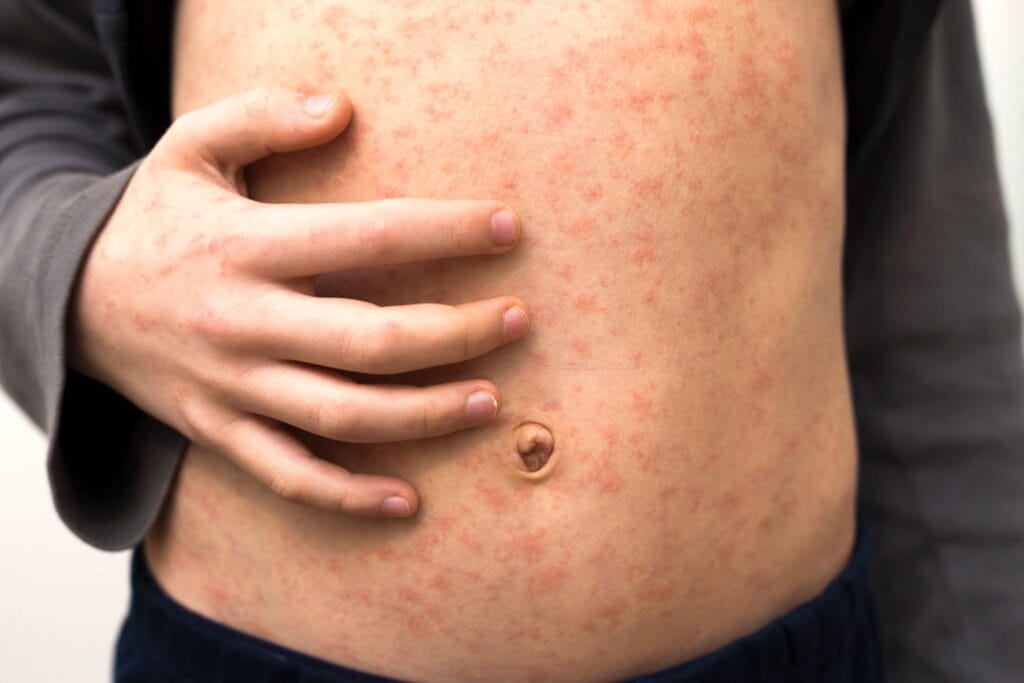
- A blotchy red or brown rash
- Rash starting behind the ears or on the face, then spreading downward
The rash may be harder to detect on brown and black skin. Look for changes in skin texture, warmth or general unwellness rather than colour alone.
Why Measles Can Be Serious
Measles is not just a simple childhood illness.
Possible complications include:
- Ear infections
- Pneumonia
- Dehydration
- Seizures
- Brain inflammation (encephalitis)
- Rarely, death
Young children and those who are not vaccinated are at greatest risk.
Vaccination – The Best Protection
Protection is provided by the MMR vaccine.
- Two doses provide around 99% protection
- Around 95% vaccination coverage is needed to prevent outbreaks
- Children who have missed doses should receive catch-up vaccination as soon as possible
When to Seek Medical Advice
Seek urgent medical advice if a child with suspected measles:
- Is very drowsy
- Has breathing difficulties
- Shows signs of dehydration
- Has a seizure
- Develops severe headache or neck stiffness
If measles is suspected, call ahead before attending a clinic to reduce the risk of spreading infection.
Key Takeaway
- Measles spreads quickly
- It can cause serious complications
- It is preventable
Ensuring
children receive two doses of the MMR vaccine protects them and protects vulnerable members of the community who cannot be vaccinated.
Measles FAQ
Clear, practical answers for parents and carers. If you are worried about a child, seek medical advice.
What is measles?
Measles is a highly contagious viral infection. It spreads through coughs and sneezes, close contact, and touching surfaces that have been contaminated.
How does measles spread?
- Airborne droplets from coughing and sneezing
- Close contact with someone who is infectious
- Touching contaminated objects, then touching eyes, nose, or mouth
Measles can spread very easily in schools, nurseries, and busy indoor settings.
What are the early symptoms of measles?
- High fever
- Red, sore, watery eyes
- Runny nose
- Persistent cough
- Sneezing
What does the measles rash look like?
A blotchy red or brown rash often starts behind the ears or on the face, then spreads down the body over several days. It may be harder to see on brown or black skin, so changes in skin texture, warmth, and overall illness can be important clues.
What are Koplik spots?
Koplik spots are small white spots that can appear inside the mouth. They can occur before the rash and may help clinicians recognise measles.
Why can measles be serious?
Measles can cause complications, particularly in young children and those who are not vaccinated.
- Ear infections
- Chest infections and pneumonia
- Dehydration
- Seizures
- Brain inflammation (encephalitis)
How can measles be prevented?
Vaccination is the most effective protection. The MMR vaccine is given in two doses, which provides very strong protection against measles.
What if my child missed the MMR vaccine?
Children and adults can usually have catch-up doses. Book a vaccination appointment as soon as possible to reduce the risk of infection and to help protect others.
When should I seek urgent medical help?
Seek urgent medical advice if a child with suspected measles:
- Is very drowsy or difficult to wake
- Has breathing difficulties
- Shows signs of dehydration
- Has a seizure
- Develops severe headache or neck stiffness
If you think measles is possible, call ahead before attending a clinic so infection control measures can be put in place.
How long is someone with measles contagious?
A person is typically infectious from around 4 days before the rash appears until about 4 days after the rash starts. Follow local public health advice on exclusion from school or nursery.