Platelet-Rich Plasma (PRP) therapy is widely used across hair loss, dermatology, orthopaedics, and regenerative medicine. When performed correctly, it is generally safe and well tolerated. However, like any medical procedure, it is not completely risk-free.
Understanding what can go wrong, what is normal after treatment, and when to seek medical help is an important part of informed decision-making.
Common and expected side effects
Most people experience temporary, self-limiting effects after PRP. These are expected and usually settle within a few days.
Common effects include mild pain or tenderness at injection sites, local swelling, redness or warmth, a tight or pressure sensation, and mild headache (particularly after scalp PRP). These symptoms typically improve within 24–72 hours and do not require medical treatment beyond simple pain relief if needed.
What can go wrong with PRP therapy?
Although uncommon, complications usually fall into a few predictable categories.
Poor treatment response or lack of visible improvement
PRP does not work for everyone. Suboptimal response may occur due to advanced disease where the target tissue is no longer viable, incorrect diagnosis, poor PRP preparation or injection technique, an inadequate number of treatment sessions, or unrealistic expectations. PRP supports existing tissue repair but does not regenerate tissue that has already been lost.
Inflammatory reactions
PRP can trigger a short-lived inflammatory response, which is part of its biological effect. In some cases, this reaction may be more pronounced, causing increased pain or swelling, prolonged tenderness, or a temporary worsening of symptoms before improvement. This is more likely when leukocyte-rich PRP is used, when injection technique is aggressive, or when the treated area is already inflamed. These reactions usually settle but should be monitored.
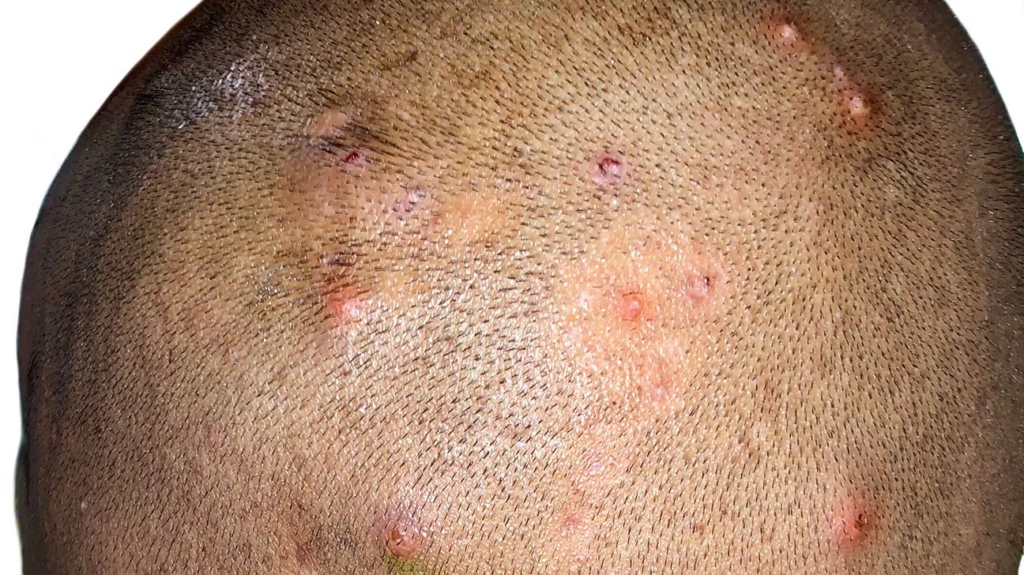
Infection
Infection following PRP is rare but important. When it does occur, it is usually linked to poor aseptic technique, non-clinical treatment environments, or inadequate skin preparation. Because PRP involves blood handling and injections, strict sterile technique is essential.
Nerve or vessel irritation
Uncommon effects can include sharp or shooting pain during injection, temporary numbness or tingling, or bruising. These symptoms usually resolve on their own but should be assessed if persistent.
Vasovagal reactions
Some people may feel light-headed, nauseous, or faint during or after PRP injections. This is typically short-lived and related to anxiety, pain, or needle sensitivity rather than the PRP itself.
When should you seek medical help?
You should seek urgent medical advice if you experience increasing redness, warmth, swelling, or pain after 48–72 hours; fever or flu-like symptoms; pus, discharge, or spreading redness at the injection site; severe or worsening pain not controlled with simple analgesia; sudden visual symptoms following facial or scalp injections; or new neurological symptoms such as numbness, weakness, or visual changes. These are not normal reactions and should be assessed promptly.
When to contact your doctor
You should contact your doctor if pain or swelling lasts longer than expected, if you are unsure whether a reaction is normal, if you have concerns about lack of response to treatment, or if you experience unexpected side effects. Early review often prevents minor issues becoming more significant.
Why medical oversight matters
PRP is sometimes marketed as a cosmetic treatment, but it is a medical procedure involving venepuncture, blood processing, and injection into living tissue. Medical oversight ensures accurate diagnosis and patient selection, appropriate PRP preparation, safer injection technique, prompt recognition of complications, and clear pathways for aftercare and follow-up. This significantly reduces risk and improves outcomes.
Reassuring bottom line
PRP is generally very safe when performed correctly. Most side effects are mild and temporary, and serious complications are rare. Knowing what is normal and what is not is key. Choosing a medically led service with clear aftercare advice provides the best balance of safety, effectiveness, and reassurance.